Hard Water Spots on Your Shower Glass Won't Scrub Off? Here's the Real Reason
The direct financial damage from a commercial break-in extends well past what was stolen. Businesses also absorb the expense of repairing entry points, replacing damaged inventory displays or equipment, and in some cases, pausing operations during cleanup and investigation. Beyond the tangible losses, there is also the damage to client trust and staff morale that follows a security breach.
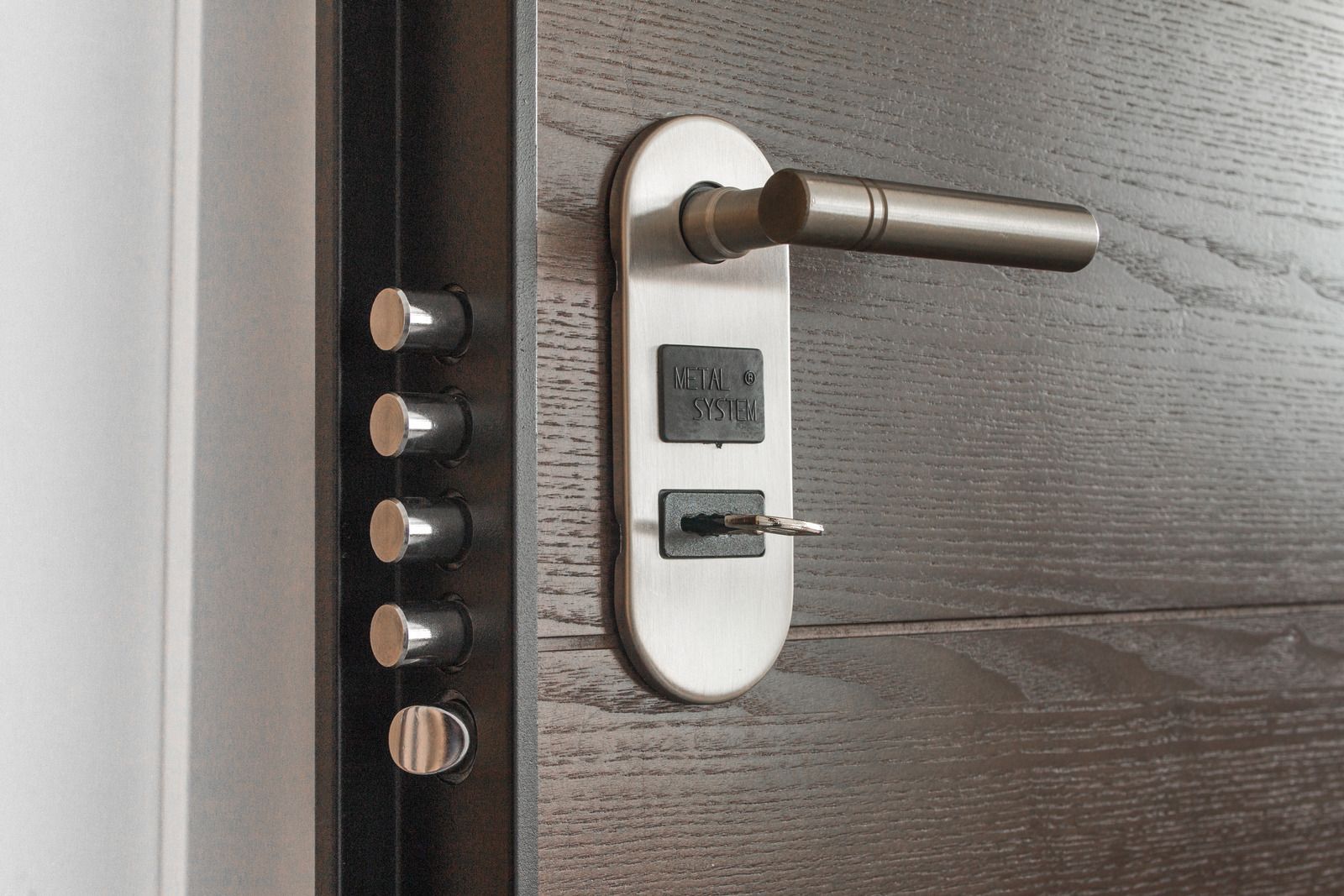
A business that has visibly invested in quality locks, reinforced door frames, and layered access control sends a different message than one with hollow-core doors and standard pin tumbler locks. Criminals frequently assess entry points before attempting a break-in, and visible deterrents alter that calculus.
The Real-World Impact of Inadequate Commercial Locking
Break-Ins and Their Full Scope
Rekeying Vulnerabilities
Choosing the right lock type depends on your business type, entry points, and level of access control required. Below is a breakdown of the most widely used commercial lock categories:
Categories of High-Security Commercial Locks
Internal Theft and Access Misuse
External threats often receive more attention, but internal theft accounts for a substantial share of business losses each year. Restricted access zones, combined with electronic audit trails and high-security mechanical locks, reduce the opportunity for unauthorized access by current or former employees. This is not about distrust; it is about building a system where responsibility and accountability are built into the physical environment.
| Lock Type | Best For | Key Feature |
|---|---|---|
| Deadbolt Locks | Main entry doors | High resistance to forced entry |
| Mortise Locks | High-traffic commercial doors | Durability and multi-point locking |
| Electronic Keypad Locks | Offices, server rooms | Keyless access with audit trails |
| Magnetic Locks (Maglocks) | High-security zones | Electromagnetic holding force |
| Cylindrical Lever Locks | Interior commercial doors | ADA compliance and ease of use |
| Padlocks (Commercial Grade) | Storage units, gates | Portable, hardened shackle design |
Each category has its place within a layered security strategy. Many businesses benefit from combining mechanical high-security locks at perimeter entries with electronic access control at interior sensitive zones.
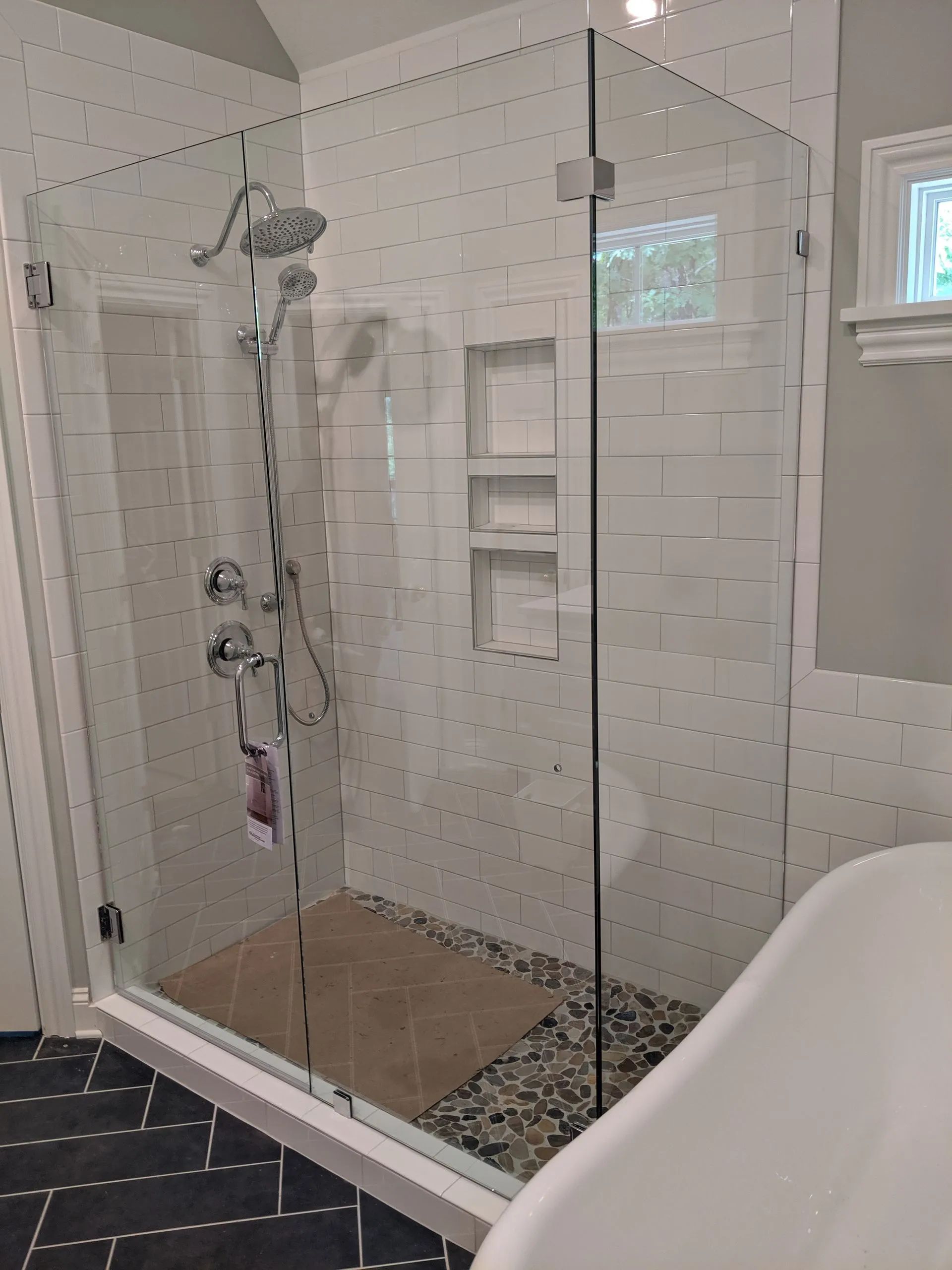
Quick Answer: Individual water spots that stay on shower glass no matter how hard you scrub are usually past the cleaning stage entirely. Hard water leaves calcium and magnesium behind as it dries, and if those deposits sit on the glass long enough, they stop being a surface film and start dissolving the glass itself. Once that happens, the spots are inside the surface rather than on top of it, so no cleaner or scrub pad reaches them. The only real fixes at that point are professional glass polishing, which grinds the etched layer away, or replacing the panel outright. Catching the spots earlier, before they etch, is what keeps that choice off the table.
You've gone after those spots with a sponge, then a scrub pad, then the good glass cleaner from under the sink, and they're still sitting there in the same spots they always are: small rings and dots clustered low on the door, right where water beads up and dries between showers. From a distance the glass looks clean. Up close, those marks catch the light at an angle and refuse to budge, no matter how much elbow grease you put into them.
That's the detail that trips people up. A spot you can still feel with a fingernail is one thing. A spot that's perfectly smooth and still won't come off is a different problem entirely, and it's not one a stronger cleaner solves.
Why Some Spots Wipe Away and Others Don't
Water leaves the same basic residue every time it dries on glass without being wiped off: dissolved calcium and magnesium, the minerals that make water "hard" in the first place. What happens to that residue afterward depends entirely on how long it sits.
Fresh mineral deposits sit on top of the glass. They have texture, a faint grit you can feel if you run a finger over a dry spot, and an acidic cleaner breaks them down and lifts them off because the deposit and the glass underneath are still two separate things. This is the stage most shower-cleaning advice is written for, and it works, provided the spot hasn't moved past it.
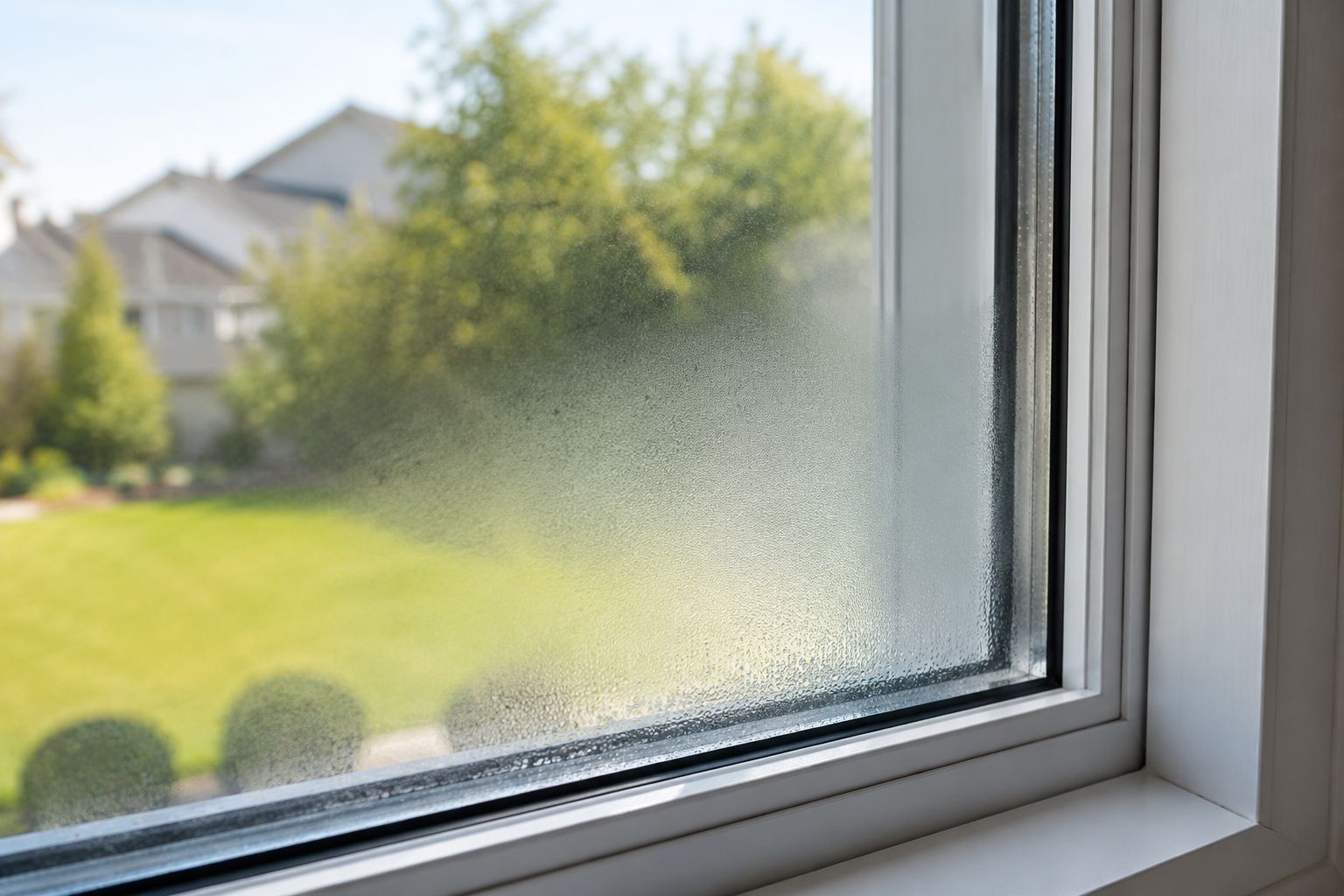
Left alone, that same residue keeps drawing more water to the same spot, shower after shower, and the chemistry underneath it starts to shift. Instead of sitting on the glass, the minerals begin reacting with the glass. What was once a removable film becomes part of the surface. Feel for texture at that point and there usually isn't any. The spot looks identical to the deposits around it, but a fingernail glides right over it, because there's nothing raised left to scrape at. The glass itself has changed.
That distinction, texture versus no texture, tells you almost everything about whether a spot is going to respond to cleaning or not.
What's Actually Happening to the Glass
Glass is not as inert as it looks. It's mostly silica held in a network of chemical bonds. Water carrying dissolved minerals slowly pulls sodium ions from the glass and trades them for hydrogen. Left running for months, it dissolves the glass network one microscopic layer at a time.
As that reaction continues, the water on the spot turns more alkaline, which speeds it up further. Calcium settles into the tiny pits left behind. What remains isn't residue anymore. It's a shallow crater with minerals inside it, and cleaners dissolve deposits, not eaten-away glass.
That's why an etched spot rarely appears alone. The same water pattern, a drip line below the showerhead or a low corner that never fully drains, recurs every time you shower. Each cycle deepens the last, so etched spots show up in a recognizable pattern rather than scattered randomly.
Why Upstate Wells Push Spots Toward Etching Faster
Not every household fights the same water. Across Greenwood, Newberry, Laurens, and the surrounding Piedmont counties, many homes draw from private wells rather than a treated municipal line. A well delivers whatever the granite aquifer holds, and Piedmont wells rank among the hardest in South Carolina thanks to that granite-rich geology.
Harder water means every drop drying on the glass carries more calcium and magnesium, so the etching cycle runs with a heavier mineral load. Add the humidity that keeps bathrooms slow to dry in older homes around Abbeville, Clinton, and Ware Shoals, and glass in a well-water household spots faster.
Tip: If you're on a private well and you've never had the water tested, a basic hardness test tells you a lot about how aggressive your glass maintenance needs to be. Homes drawing harder water get more value out of a daily squeegee habit than homes on a treated municipal supply, because the mineral load reaching the glass is simply heavier.
The Habits That Push Spots Past the Point of No Return
Ironically, a lot of the etching professionals see didn't start with neglect. It started with someone trying hard to get spots off and reaching for the wrong tool.
A spot that won't lift with normal cleaning tempts people toward stronger measures: a razor blade to scrape it, a pumice stone or an abrasive pad to grind at it, steel wool, or a cleaner strong enough to strip paint. Every one of those makes the surface worse rather than better. A blade or an abrasive pad leaves fine scratches across the glass, and scratched glass collects the next round of mineral deposits faster than smooth glass did, since minerals settle into the tiny grooves and have far more surface area to bond to. Highly alkaline cleaners, the kind marketed as heavy-duty soap scum removers, can push the surface chemistry in the same direction that caused the etching in the first place, especially with repeated use on the same spot.
The instinct makes sense. A spot that won't budge feels like it needs more force, not less. But more force on glass that's already partway to etched is exactly how a light spot turns into a permanent one.
Warning:
If you've already scraped at a spot with a razor blade or worked it over with a pumice stone, stop there. Going back over the same area again to "finish the job" is how a scratch becomes a groove, and a groove holds minerals worse than the etching you started with. Have the glass looked at before you take another pass at it.
Telling a Cleanable Spot From an Etched One
You don't need special equipment to sort this out, just a dry panel and good light.
Run A Fingernail Across The Dry Spot
Texture means mineral deposits remain on the surface, giving a proper mineral-dissolving cleaner something to remove. If the glass feels completely smooth yet still appears cloudy or spotted, the damage may have penetrated the surface, meaning ordinary cleaning products no longer have anything to grab onto.
Check The Spot At An Angle In Bright Light
Etched spots often become easier to see when bright light strikes the glass from a shallow angle instead of directly. That happens because etching changes how the surface scatters light. If a spot disappears when viewed straight on but returns at an angle, etching is likely.
Watch Whether The Same Spots Keep Returning After A Real Cleaning
A spot that disappears with proper mineral cleaning but returns in exactly the same location after every shower may indicate underlying etching. Focusing on a stubborn few square inches, rather than widespread haze across the panel, strongly suggests restoration or replacement deserves consideration.
Check The Chrome Fixtures Near The Worst Spots
A faucet or hinge covered with the same dull, gritty buildup near heavily spotted glass suggests water has repeatedly dried in that area. It is useful supporting evidence, not proof by itself, but when combined with the glass condition, it can strengthen the case for mineral damage.
What Restoration and Replacement Each Actually Involve
Once a spot is confirmed etched, cleaning products are off the table for good. That doesn't automatically mean a new panel, though.
Professional glass polishing works for light to moderate etching. A technician grinds the compromised surface layer below the depth of the pitting, using a graduated series of abrasive compounds, then polishes back to clarity. It's precise work, and uneven grinding leaves distortion, which is why home buffing kits rarely succeed.
Deep etching is different, because most shower glass is tempered. That strength comes from a compression layer built into the surface, and grinding deep enough to erase heavy etching can cut into it. A shop weighs whether enough glass can safely come off, and past a point, replacement is the safer answer.
Replacement glass doesn't have to repeat what happened to the original panel, either. A protective coating applied to new glass fills the same microscopic surface pores that minerals otherwise settle into, so water beads and runs off instead of drying in place. Paired with the habits below, that buys new glass real time before the same cycle gets a chance to start over.
Keeping New or Restored Glass From Spotting Again
None of this is complicated. It just has to be consistent, because the reaction that causes etching happens a little at a time, cycle after cycle, not all at once.
Squeegee the glass after every shower, while the water is still beading rather than drying in place, and pay extra attention to the low corners and the bottom rail. Those spots are the last to dry and the first place water pools shower after shower, which makes them the usual starting point for recurring etching. Thirty seconds with a squeegee removes more mineral load than any cleaning product applied later, because it stops the deposit from ever forming in the first place.
Skip anything abrasive, even on light haze. A soft microfiber cloth and a mineral-appropriate cleaner protect the surface the same way avoiding a razor blade does. A scratched panel is a head start on the next round of spotting, not a clean slate.
Frequently Asked Questions
Why won't a hard water spot come off even with a strong glass cleaner?
Because it has stopped sitting on the glass. Left in place long enough, mineral deposits react with the surface and create shallow etching. Cleaners dissolve deposits, not damage inside the glass, so nothing lifts it.
How long does it take for a water spot to actually etch into glass?
It varies with water hardness and how often the spot stays wet, but rarely happens fast. Etching builds gradually through repeated cycles of water drying in one place, which is why low corners etch first.
Can I prevent hard water etching without a water softener?
Yes. A softener reduces mineral load across every fixture, but a squeegee habit and protective coating handle the shower door directly. Many homes manage on consistent glass habits alone, especially on moderately hard municipal water.
Is it safe to use a razor blade to scrape off stubborn spots?
It's a common way stubborn spots turn permanent. A blade scratches tempered glass, and those scratches give the next round of deposits more surface to grab. If a proper cleaner and cloth fail, stop there.
Does a professional polish work on every etched shower door?
Not always, which is why an in-person assessment matters. Light to moderate etching responds well to grinding and polishing. Deep etching may require removing more glass than a tempered panel safely holds, so replacement wins.
Will new shower glass eventually get the same spots?
It can, if the same water and habits stay in play. New glass isn't naturally hard-water resistant, but a protective coating and squeegee habit give it a real head start, especially with harder well water.
What Those Stubborn Spots Are Really Telling You
A shower door covered in spots that refuse to scrub off has usually made the decision for you already, since cleaning products stop working once the damage moves inside the glass. The pattern tells the story: spots clustered in low corners and drip lines, smooth to the touch, sharper at an angle than head-on. Reading that pattern early is really what separates a quick polish from a full replacement, and it saves you a lot of glass down the line.
With 140years of hands-on experience across Greenwood, SC, Cross Creek Glass
can gauge exactly how deep the etching runs and whether a professional polish
restores the panel or a coated replacement holds up better against Upstate water. That judgment is the part a home buffing kit cannot offer, and it matters most on the spots that keep returning to the same low-corner and drip-line positions shower after shower. Glass caught at that stage still has real options worth weighing.