Frameless or Framed Shower Enclosure? How They Differ Beyond the Look
The direct financial damage from a commercial break-in extends well past what was stolen. Businesses also absorb the expense of repairing entry points, replacing damaged inventory displays or equipment, and in some cases, pausing operations during cleanup and investigation. Beyond the tangible losses, there is also the damage to client trust and staff morale that follows a security breach.
A business that has visibly invested in quality locks, reinforced door frames, and layered access control sends a different message than one with hollow-core doors and standard pin tumbler locks. Criminals frequently assess entry points before attempting a break-in, and visible deterrents alter that calculus.
The Real-World Impact of Inadequate Commercial Locking
Break-Ins and Their Full Scope
Rekeying Vulnerabilities
Choosing the right lock type depends on your business type, entry points, and level of access control required. Below is a breakdown of the most widely used commercial lock categories:
Categories of High-Security Commercial Locks
Internal Theft and Access Misuse
External threats often receive more attention, but internal theft accounts for a substantial share of business losses each year. Restricted access zones, combined with electronic audit trails and high-security mechanical locks, reduce the opportunity for unauthorized access by current or former employees. This is not about distrust; it is about building a system where responsibility and accountability are built into the physical environment.
| Lock Type | Best For | Key Feature |
|---|---|---|
| Deadbolt Locks | Main entry doors | High resistance to forced entry |
| Mortise Locks | High-traffic commercial doors | Durability and multi-point locking |
| Electronic Keypad Locks | Offices, server rooms | Keyless access with audit trails |
| Magnetic Locks (Maglocks) | High-security zones | Electromagnetic holding force |
| Cylindrical Lever Locks | Interior commercial doors | ADA compliance and ease of use |
| Padlocks (Commercial Grade) | Storage units, gates | Portable, hardened shackle design |
Each category has its place within a layered security strategy. Many businesses benefit from combining mechanical high-security locks at perimeter entries with electronic access control at interior sensitive zones.
Quick Answer: A framed enclosure lets a metal channel carry the weight, guide the door, and catch water, so it uses thinner glass and forgives walls that are not perfectly square. A frameless enclosure removes that channel, so thicker tempered glass, precise hinges, and careful sealing do the same jobs. Semi frameless sits in between. Frameless is easier to wipe down and shows off your tile, while framed gives you more margin for error. The right choice depends on your walls, your curb, and how much upkeep you want, not only on the look.
You are standing in a bathroom with the old tub gone and the tile finally set, and two sample doors lean against the vanity. One has a bright metal border around every edge. The other is nothing but glass and a few small hinges. They both look fine in the showroom, and everyone you ask seems to have a strong opinion. What nobody tells you is that these are two different ways of building a wall of water, and the difference goes far past what you see from the doorway.
Around Greenwood and the rest of the Upstate, plenty of homes have bathrooms that are decades old, with tile that was set before anyone expected a glass door to hang on it. Humid summers, hard use, and walls that have settled a little all play into which style serves a shower well. This guide walks through how the two styles differ in structure, glass, hardware, water control, upkeep, and fit, so you can choose with the whole picture in front of you.
What Each Style Actually Is
Framed Enclosures Wrap The Glass In Metal
Framed showers use aluminum channels around glass edges, with headers, side rails, and bottom tracks supporting panels and guiding door movement.
Frameless Enclosures Let The Glass Do The Work
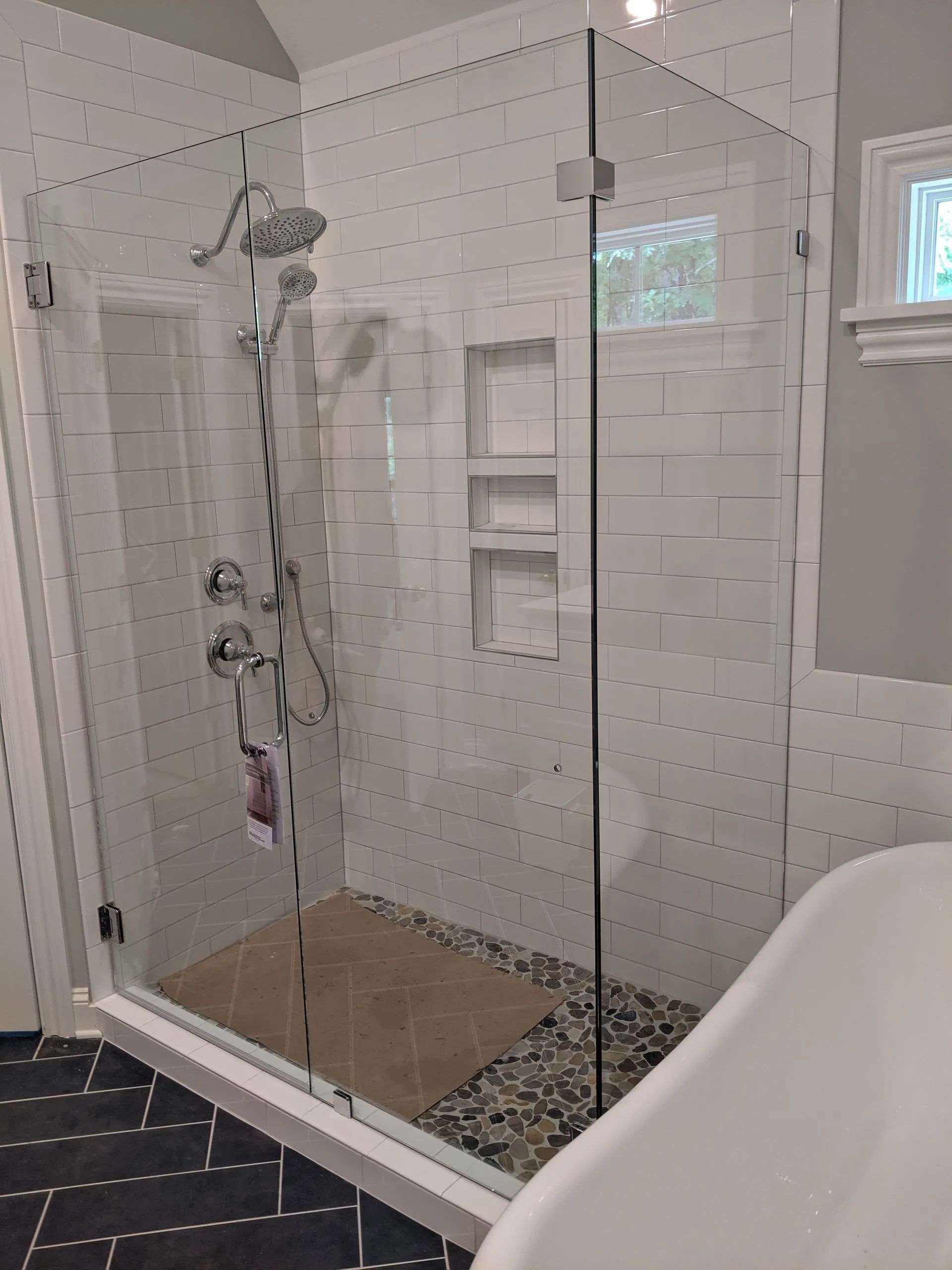
Frameless designs use minimal metal, relying on thick glass, hinges, clips, and brackets for support. These small hardware components carry substantial weight.
Semi Frameless Is The Middle Road
Semi frameless doors retain tracks or framing along selected edges, often top or bottom, while leaving others exposed for a cleaner appearance.
Tip: Lay the style question over a single practical test. Ask yourself whether you want the shower to disappear or to be defined. Frameless disappears into the room and lets the tile take over. Framed and semi frameless draw a line around the shower, which some people prefer in a busy bathroom.
The Glass Itself Is Not the Same
Thickness Changes With The Structure
Framed and semi frameless doors commonly use thinner glass, around three sixteenths to a quarter inch. Frameless doors generally need heavier glass, often three eighths or half an inch.
Weight Is A Real Consideration
Thick frameless doors are heavy, placing significant weight on a few hinge points. Proper hardware, wall support, and secure mounting are essential.
Safety Glass Is The Standard For Every Type
All shower enclosures use tempered glass, which is stronger than ordinary glass and breaks into smaller pieces. It cannot be cut or drilled after manufacturing.
Clear Is Not The Only Choice
Both styles offer clear, low iron, frosted, and patterned glass. Low iron glass reduces the green tint along edges, keeping white tile looking cleaner.
Hardware: Where the Quiet Differences Live
Framed Doors Hide Their Hardware Inside The Frame
Rollers, hinges, and handles attach to the metal frame, allowing some post-installation adjustment. Minor rubbing issues can often be corrected with simple screwdriver adjustments.
Frameless Doors Put The Hardware On Display
Hinges, clamps, and brackets support the glass and remain visible. They must match the room's finish and anchor securely into solid wall backing.
Sliding And Swinging Both Exist In Each Style
Framed sliding doors use bottom tracks and rollers, while frameless versions often hang from overhead rails. Consider clearance and nearby fixtures when choosing door movement.
Finish Matters In Humid Weather
Quality hinge and bracket finishes resist spotting but need occasional wiping. Ask about hardware materials and coatings, as thin plating can corrode over time.
Water Control: Who Stops the Splash
A Frame Catches Water For You
Framed enclosures use channels, seals, and bottom tracks to direct water back into the shower, providing extra protection when seals begin wearing.
A Frameless Door Relies On A Handful Of Details
Frameless showers depend on curb slope, door sweeps, seals, glass overlap, and spray direction. Correct installation keeps water inside, but small errors can cause leaks.
Installation Quality Decides Most Leaks
Most leaks result from installation problems rather than enclosure style. Misaligned panels, missing silicone, or incorrectly sloped curbs can cause water escape in either design.
Where The Shower Head Points Matters
A shower head aimed directly at the door seam sends water toward a vulnerable area. Plan spray direction and valve placement before finalizing the glass layout.
Your Walls Make the Call
Old Houses Are Rarely Square
Older Upstate homes often have uneven walls, settled floors, and irregular tile work. Framed enclosures accommodate minor differences through adjustable side rails.
Frameless Hardware Has A Limited Range
Adjustable hinges correct minor wall lean, usually around a quarter inch. Larger differences may require custom glass measured carefully because tempered glass cannot be trimmed onsite.
Measure After The Tile Is Done
Tile and setting materials change wall thickness. Measure finished surfaces at the top, middle, and bottom to ensure the door fits accurately.
Backing And Anchors Deserve Attention
Heavy frameless doors need solid wall blocking or weight-rated hinge anchors behind the tile. Installing proper support during remodeling makes mounting easier.
Warning:
Do not install a heavy glass door by drilling into tile over hollow wall with no backing. Hinges that pull out of the wall under the weight of thick glass can drop a panel, which is a hazard to anyone in the room. If you are unsure what is behind your tile, have it checked before the glass is ordered.
The direct financial damage from a commercial break-in extends well past what was stolen. Businesses also absorb the expense of repairing entry points, replacing damaged inventory displays or equipment, and in some cases, pausing operations during cleanup and investigation. Beyond the tangible losses, there is also the damage to client trust and staff morale that follows a security breach.
A business that has visibly invested in quality locks, reinforced door frames, and layered access control sends a different message than one with hollow-core doors and standard pin tumbler locks. Criminals frequently assess entry points before attempting a break-in, and visible deterrents alter that calculus.
The Real-World Impact of Inadequate Commercial Locking
Break-Ins and Their Full Scope
Rekeying Vulnerabilities
Choosing the right lock type depends on your business type, entry points, and level of access control required. Below is a breakdown of the most widely used commercial lock categories:
Categories of High-Security Commercial Locks
Internal Theft and Access Misuse
External threats often receive more attention, but internal theft accounts for a substantial share of business losses each year. Restricted access zones, combined with electronic audit trails and high-security mechanical locks, reduce the opportunity for unauthorized access by current or former employees. This is not about distrust; it is about building a system where responsibility and accountability are built into the physical environment.
| Lock Type | Best For | Key Feature |
|---|---|---|
| Deadbolt Locks | Main entry doors | High resistance to forced entry |
| Mortise Locks | High-traffic commercial doors | Durability and multi-point locking |
| Electronic Keypad Locks | Offices, server rooms | Keyless access with audit trails |
| Magnetic Locks (Maglocks) | High-security zones | Electromagnetic holding force |
| Cylindrical Lever Locks | Interior commercial doors | ADA compliance and ease of use |
| Padlocks (Commercial Grade) | Storage units, gates | Portable, hardened shackle design |
Each category has its place within a layered security strategy. Many businesses benefit from combining mechanical high-security locks at perimeter entries with electronic access control at interior sensitive zones.
Your Walls Make the Call
Old Houses Are Rarely Square
Older Upstate homes often have uneven walls, settled floors, and irregular tile work. Framed enclosures accommodate minor differences through adjustable side rails.
Frameless Hardware Has A Limited Range
Adjustable hinges correct minor wall lean, usually around a quarter inch. Larger differences may require custom glass measured carefully because tempered glass cannot be trimmed onsite.
Measure After The Tile Is Done
Tile and setting materials change wall thickness. Measure finished surfaces at the top, middle, and bottom to ensure the door fits accurately.
Backing And Anchors Deserve Attention
Heavy frameless doors need solid wall blocking or weight-rated hinge anchors behind the tile. Installing proper support during remodeling makes mounting easier.
Warning:
Do not install a heavy glass door by drilling into tile over hollow wall with no backing. Hinges that pull out of the wall under the weight of thick glass can drop a panel, which is a hazard to anyone in the room. If you are unsure what is behind your tile, have it checked before the glass is ordered.
Cleaning and Upkeep Over the Years
Framed Enclosures Collect Grime In The Channels
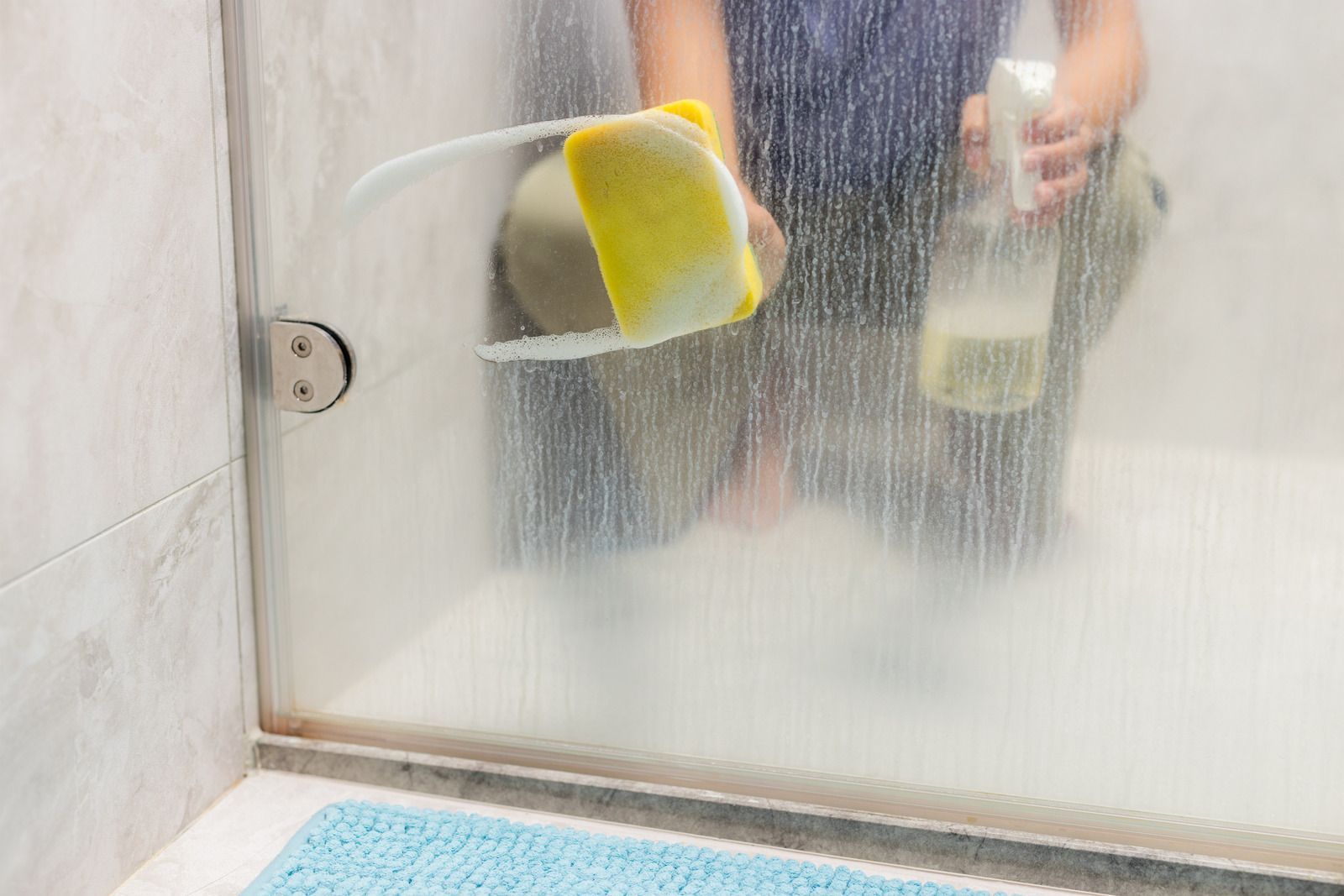
Bottom tracks and frame joints trap soap scum, hair, and mineral deposits. Regular brushing is needed to prevent damp buildup and mildew.
Frameless Enclosures Are Quicker To Wipe
Without tracks or crevices, frameless glass is easier to clean. Regular squeegee use helps maintain clarity, while seals, sweeps, and hinges need occasional attention.
Hard Water Shows More On Open Glass
Large frameless panels reveal water spots and streaks easily. Protective glass coatings help water bead and run off but do not eliminate routine cleaning.
Both Styles Last For Many Years
Shower glass rarely wears out. Seals, sweeps, rollers, and hinges experience most of the wear and can usually be replaced separately.
Matching the Style to the Bathroom
Choose Frameless When You Want The Tile To Be The Star
Frameless suits bathrooms with straight walls, properly sloped curbs, and homeowners willing to squeegee regularly. Its open design also makes smaller bathrooms feel more spacious.
Choose Framed When Forgiving Is The Priority
Framed enclosures suit uneven walls, older tub surrounds, and busy households needing sturdy, adjustable doors that handle frequent everyday use.
Choose Semi Frameless When You Want A Balance
Semi frameless combines a lighter appearance than full framing with some structural support and water control from selected framed edges.
Consider Who Uses The Shower
Door width, opening height, and entry design matter. Consider threshold access, swing direction, and whether older family members need an unobstructed entrance.
Frequently Asked Questions
Is a frameless shower enclosure always better than a framed one?
No. Each does certain things better. Frameless offers a cleaner look and fewer places for grime to hide, while framed offers more tolerance for walls that are not square and a built in channel to guide water. The better choice is the one that suits your walls, your curb, and your habits.
Does frameless glass really need to be thicker?
Generally, yes. Without a frame to share the load, the glass carries the door's weight on a few hinges, so frameless doors commonly use heavier tempered glass than framed ones. The exact thickness depends on the design, so confirm it for the door you choose.
Can a frameless shower leak?
It can, just as a framed one can. Frameless relies on the slope of the curb, the sweep, the seals, and the alignment of the glass instead of a surrounding frame, so small problems show up sooner. A well fitted frameless enclosure keeps water in very effectively.
What if my shower walls are not plumb?
A small amount of lean can be handled by adjustable hardware, and a framed or semi frameless design can often absorb more. If the opening is well out of true, a custom cut frameless door measured to your actual dimensions is the usual answer.
Do I measure before or after the tile is installed?
After. Tile and setting material add thickness to the walls, and tempered glass cannot be trimmed once it has been made. Measuring finished surfaces at several heights prevents a door that does not fit.
Can I switch from framed to frameless later?
Often you can, but the details matter. A frameless door needs solid backing for its hinges and a curb that is sloped to shed water, so the walls, the curb, and the spray direction should be looked at before you commit.
Pick the Structure, Then the Style
The look is the part you see on the first day, but the structure is the part you live with for years. A framed enclosure trades some visual openness for sturdiness and the forgiveness of a channel that guides water and absorbs a wall that is not quite square. A frameless one trades that forgiveness for clarity and easy cleaning, and asks more of the walls, the hinges, and the person who fits it. Semi frameless sits comfortably in between the two.
Knowing what each style asks of your bathroom makes the choice far easier, and it keeps the glass you love from turning into a project you regret. Cross Creek Glass
has spent 140
years fitting shower glass across Greenwood, SC and the surrounding Upstate, including custom cut tempered panels for older, out of square openings. A shower door that fits and holds water for years is rarely luck. It comes from choosing the structure for your walls first, then letting the style follow.